If you’re reading this, you’re already well-aware that using synthetic, chemically based products for everything is making life living on planet Earth very sick. Respiratory complications, skin rashes, autoimmune diseases, and cancers are common today, and it’s no secret that the man-made chemicals and widespread petroleum use are the root causes.
If you’re fed up with buying cleaning products that make things seem clean but add harsh chemicals and microplastics to your home environment instead, then I need to tell you about soap nuts!
Soap nuts are amazing! They clean wonderfully! They don’t cost very much to buy, and they store forever in a cool, dry place.
I also love them because they’re fun. Their name makes me chuckle every time I grab a handful of these magical little bombs of awesomeness!
As soon as you use them, you’ll quickly drop all of store-bought alternatives and use them for nearly everything you want to clean!
(As an Amazon Associate, I earn from qualifying purchases.)I am not a medical professional so please do your own research.
Now, back to soap nuts!
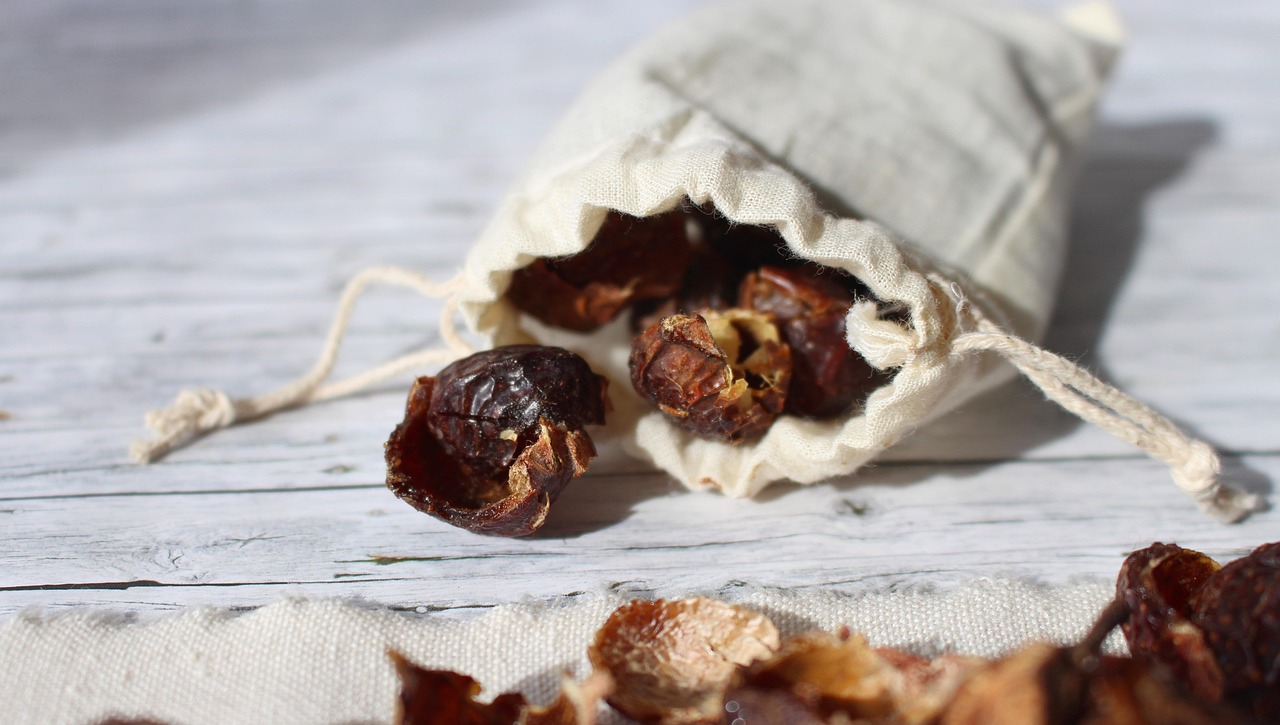
Soap nuts are not, in fact, nuts. They’re actually the dried hulls of berries from the Sapindus tree! Sapindus trees produce high levels of saponin, a naturally occurring surfactant that creates a soapy, sudsy solution when mixed with water.
How to Use Soap Nuts
Soap nuts make a gentle, useful soap that can be used for a variety of applications in your home. THESE SOAP NUTS work well for me!
How many soap nuts you’ll need for each application varies by how hard your water is. Soft water will only need 4-6 soap nuts to completely clean a whole load of laundry, while homes with hard water will need to 8-10 soap nuts to get the same level of cleanliness per wash.
Don’t be afraid to use trial and error to figure out how many soap nuts work best in your home!
Is Your Water Hard or Soft?
Hard water is water that has a higher concentration of naturally occurring minerals like calcium, magnesium, sulfates, lime, and others, dissolved in it. Soft water does not have high amounts of dissolved minerals in it.
If your water is hard, you’ll notice signs around your home.
For example, layers of buildup will accumulate on your faucets and clean dishes (it’s easiest to see on dry glassware). Your hair and skin are more likely to be dull from washing in the hard water, too.
It’s also harder to make soap suds in hard water, while softer water easily suds up with soap bubbles.
If you want to get an exact measure of how hard or soft your water is, and which minerals are in it, there are a couple of options available to you!
If your home is connected to your city’s public water system, you can check your water quality report. If you use an independent water source, like well or spring water, just buy a water hardness test kit.
THIS ONE is easy to use and will give you all the information you’re looking for!
(As an Amazon Associate, I earn from qualifying purchases.)I am not a medical professional so please do your own research.
Great Ways to Use soap Nuts Around Your Home:
Laundry Detergent
This is an awesome way to use soap nuts! Not only do they clean your laundry, they also act as a natural fabric softener, too!
They will not damage your laundry, and you can wash almost anything with soap nuts…
However, they will stain items that they directly touch while washing (and will turn whites a dingey-brown over time). The hotter the water you use, the stronger the nuts will stain. This staining will be limited to the little muslin bag, as long as it stays closed, and the nuts don’t fall out, during the wash cycle.
To use as an all-natural, non-toxic, plastic-free laundry detergent, simply put soap nuts into a small muslin or fine-mesh bag (being very careful to tie the bag securely so they don’t come out and touch your laundry) and throw it into your washer!
If you wash with warm water, you don’t need to do anything but throw the nuts in. If you wash with cold water, soak the dry nuts in a cup of hot water for about ten minutes before adding to the wash in order to rehydrate them a bit… I recommend washing in a warm or cool temperature water.
You can use the nuts whole or break them up before using.
They are good for several uses in a row, as well. The nuts are all used up when they become mushy and grey-colored. If you’re not sure if the nuts still have any cleaning power in them, simply add them to a cup of warm water and shake them around. If they become foamy and soapy, they’ll still work!
Multi-purpose Cleaner
To make a wonderful multi-purpose base soap, add 15-18 soap nuts to a quart of water in a pot. Simmer on the stove until the water is reduced by half.
It’s also a good idea to crush the soap nuts with a spoon or potato masher after they’ve boiled for about then minutes to release more of the saponins from them into the water. Cool completely.
Strain the nuts out of the liquid and store in a glass bottle. Don’t forget to put the date you made your soap on your jar!:)
(As an Amazon Associate, I earn from qualifying purchases.)I am not a medical professional so please do your own research.
Store the liquid in the refrigerator for up to two weeks.
You can use this simple soap base for:
- Hand soap
- Hard surfaces
- Soft surfaces
- Dishes
- Pets’ and children’s belongings
- Jewelry
You can try it on anything you’d usually use a store-bought soap on – without worrying about any chemicals or additives!
Shampoo
One of my favorite ways to use soap nuts is to make my own shampoo!
The soap nut shampoo cleans hair well, removing grease, dirt, and build up without stripping my hair. My hair is also softer and glossier than when I used chemical-based shampoos. (I’ve heard that soap nut shampoo helps stop dry scalp and dandruff, too, but haven’t needed it for that myself!)
I love the lack of chemicals and fragrance, and this has become one of my favorite personal care routines that I’ve gone all-natural with, thanks to the help of the lovely soap nuts.
To make soap nut shampoo, the first step is to make the liquid soap recipe above – add 15-18 soap nuts to a quart of water and then bring to a low boil for about 30 minutes. Break up the nuts after they soften up a bit, to get all of the soapy goodness out of them!
After they’ve boiled for 30 minutes, let the liquid soap cool completely.
Next, strain the liquid well. It helps to put a wash cloth into a strainer, and pour the liquid through both layers so that you can be sure to catch any small particles. This is especially helpful if you’re using a foaming pump bottle for your shampoo.
Now, dilute the liquid soap with water at a ratio of 1:4 to make it into shampoo. (So, if you’re using a bottle, fill about 1/5 of the bottle with liquid soap, and then fill the rest of the way with clean water.)
Store in the refrigerator for up to two weeks.
Add a couple of drops of your favorite essential oil if you’d like to give the shampoo a lovely scent. You can also dilute your liquid soap with herb-infused water or add 1/4 cup of dried herbs (especially herbs made of tougher, woodier material) with the soap nuts when putting them on to boil.
Some of the most excellent herbs for nourishing your hair include:
- Rosemary – stronger hair, new growth, reduces hair loss
- Fenugreek – an awesome detangler, reduces hair loss
- Aloe Vera – thickens and shines hair, sooths scalp, reduces flaking
- Lime and lemon – astringent properties great for oily hair, high vit C
- Hawthorne – thickens and strengthens hair, improves volume and health
(As an Amazon Associate, I earn from qualifying purchases.)I am not a medical professional so please do your own research.
As an additional step that’s fun, use an immersion blender or immersible blender to transform the shampoo into a luxurious foam!
Personalize Your Soap
Soap nuts have been used as a natural medicine to treat a wide variety of ailments for thousands of years. But, when used in laundry or as a liquid soap, it is not a strong disinfectant – just a good, reliable, soap-and-water cleanser.
If you want to make an antimicrobial cleaner, one option is to add antimicrobial essential oils. Experiment with how many drops of the oil to use, but start with five-or-less drops, and add more if you’d like the solution to be stronger.
Also… Soap nuts have a slightly vinegary smell. Add essential oils to create a lovely scent, if you wish. Lavender oil works great for this!
For laundry, just add a few drops of the essential oil to the muslin bag that holds your soap nuts before adding it to the wash. For liquid soap, add a couple of drops to the liquid and stir together well.
A short list of my favorite organic therapeutic essential oils to use include:
- lavender – lovely smell and various benefits
- sweet orange – wonderful, fresh scent
- lemon – fresh scent and antimicrobial properties
- tea tree – strong antimicrobial properties
- oregano – strong antimicrobial properties
(As an Amazon Associate, I earn from qualifying purchases.)I am not a medical professional so please do your own research.
Besides being all natural and great for you, one of the wonderful things about making your own home cleaning and care products is that you can experiment with different additions to your recipes! I love making small tweaks to each batch and playing with scents and uses. I hope you do the same in your kitchen!
How to Dispose of Used Soap Nuts
Now that you’re using soap nuts all the time, you’ll have used soap nuts that are now mushy with no saponins left in them.
But don’t worry! Because soap nuts come from the Earth, you can give them right back!
Don’t throw them in the trash!
Instead, pour dirty wash water or expired liquid soap outside or into your septic system with no fear of adding harsh chemicals to the natural environment… Add the spent soap nuts right into your compost! You can also bury them directly into the soil outside if you don’t have a regular compost going (yet)!
Have you made the switch to soap nuts for your home yet?! If so, please tell us all how it’s going for you! It’s great to hear another person’s success story, and every success inspires others to make the switch to a healthier, nontoxic, low-plastic lifestyle too!
Thanks for reading!
Cariel
Sources
Cleaning products emit hundreds of hazardous chemicals, new study finds. Environmental Working Group. September 12, 2023. Retrieved January 03, 2026.
Preventive role of Sapindus species in different neurological and metabolic disorders. PubMed Central (PMC). Rawat, Sarita., et al. January 21, 2022. Retrieved January 03, 2026
Saponin-Based, Biological-Active Surfactants from Plants. IntechOpen. Krejiel, Dorota, et al. July 05, 2017. Retrieved January 03, 2026
Soap Nuts: Do They Have Antibacterial Properties in the Laundry? California State Science Fair 2012 Project Summary. Pierce, Rebecca C. April 02, 2012. Retrieved January 03, 2026
Leave a Reply