Good day Friends!
Today, I’m sharing one of my favorite all-natural recipes! I originally found this recipe on Whole New Mom’s blog, and I’ve had fantastic results! It definitely works just as well as regular, store-bought baking powder.
(Seriously, I use this one all the time in my baking – and I do a lot of my own baking because I control inflammation in my body by avoiding refined sugars, dairy and processed foods!)
The most common reason people want to avoid store-bought baking powder is because most commercially produced baking powders contain sodium aluminum sulfate or sodium aluminum phosphate. While these amounts of aluminum are generally “considered safe” in the amounts used to make baked goods rise, the amount of damage aluminum does to the human body makes many people doubt that eating any amount of aluminum is safe.
In fact, you’ll usually need to search high and low to find an aluminum-free baking powder, and when you do find it, it usually carries a premium price for baking powder… and there’s just no need for that!
Instead, I invite you to make your own fresh, aluminum-free, low-priced baking powder right in your own kitchen. You’ll have no doubts about what’s in it, how old it is, and you can whip it up anytime you need to without leaving the house!
Join me in a lovely, made-from-scratch baking adventure now!
DIY Baking Powder Recipe:
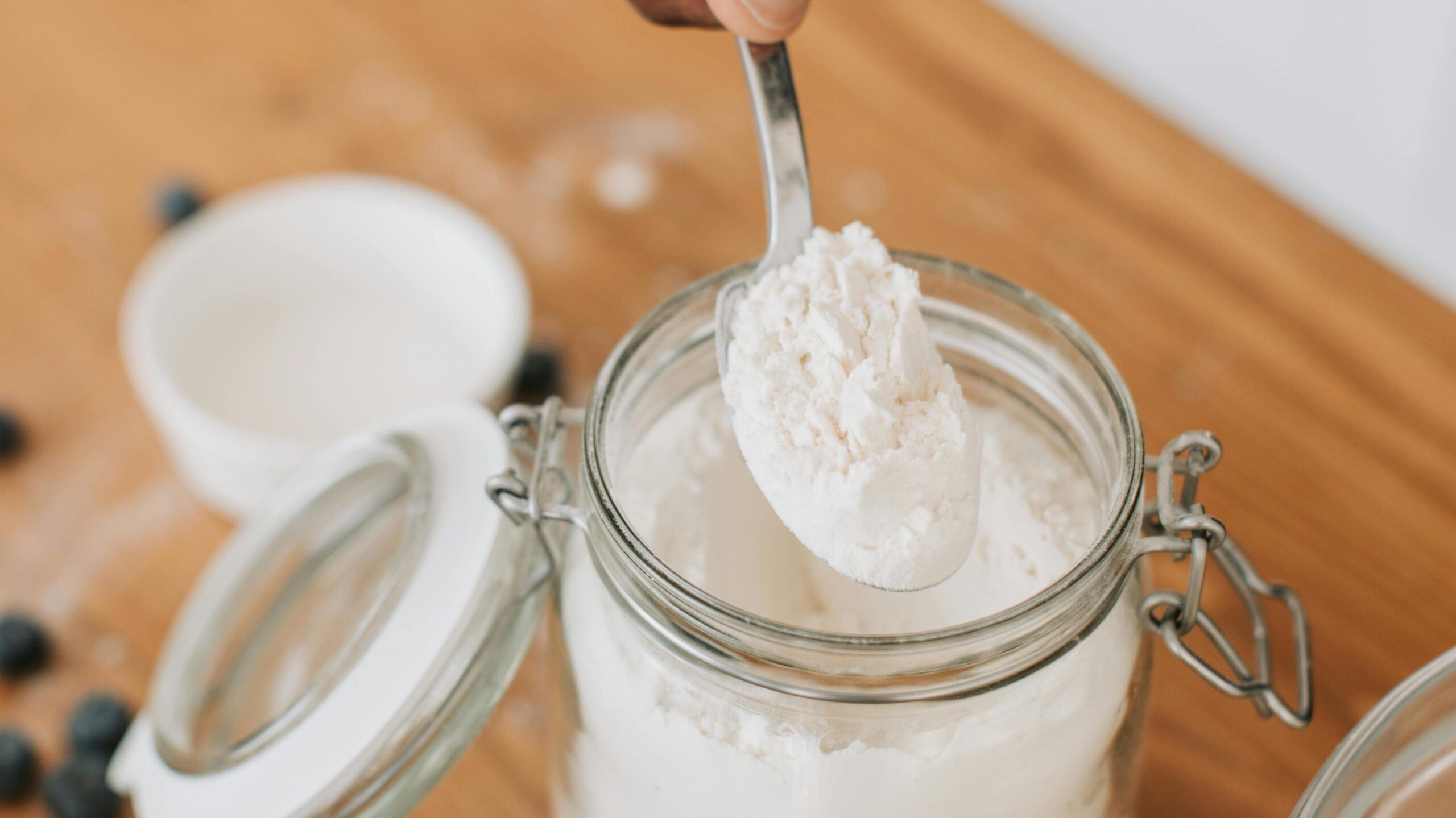
This recipe is super simple. Just mix it up in a glass jar with a tight-fitting lid and store it alongside your other baking ingredients!
Ingredients:
- 1/4 cup arrowroot powder
- 1/2 cup cream of tartar
- 1/4 cup baking soda
As an Amazon Associate, I earn from qualifying purchases.) Additionally, I am not a doctor or health physician, and the advice given here should not be used in place of professional medical advice. Please do your own research.
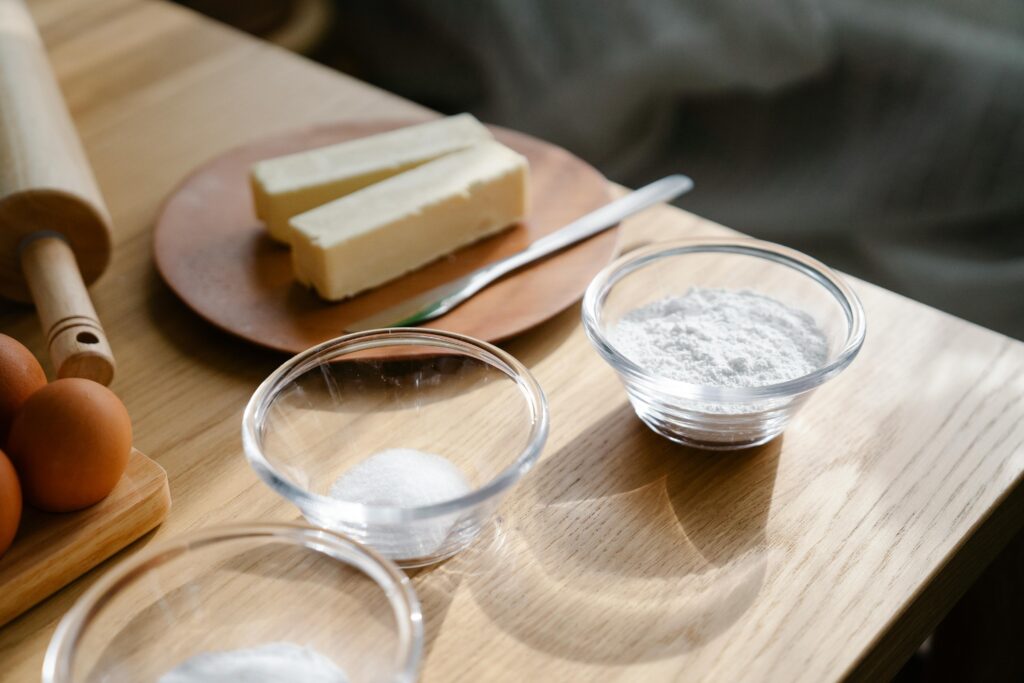
Add all three ingredients together in your container and mix them well. Use the same as you would a store-bought baking powder!
You can halve, double (or triple, or more!) this recipe to make enough for your baking needs!
Tip: If you’re not sure if your baking powder is still active, just mix a spoonful of the baking powder into a quarter cup of warm water and stir. If it fizzes and foams, then it’s still good!
About these Ingredients
Arrowroot Powder
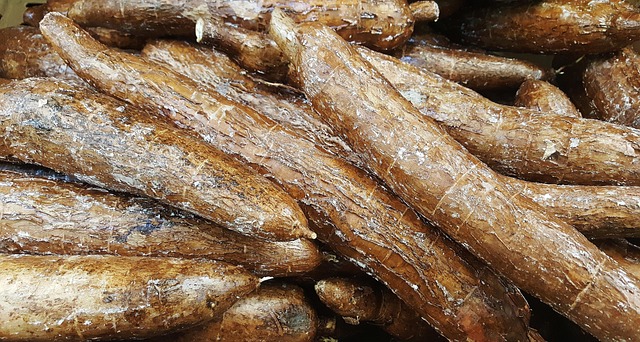
Arrowroot is a tuber taken from the rhizomes of the Maranta plant. The plant is native to the West Indes, Guyana, and western Brazil, and is widely grown in subtropical climates around the world.
The starch extracted from arrowroot is known as arrowroot starch or arrowroot powder.
Arrowroot powder is a popular starch that easily competes with corn starch, potato starch, and other popular cooking starches. In our baking powder, it prevents clumping and caking in storage.
It has a light, neutral flavor and creates a nice, clear gelatin when simmered with water. It does not turn cloudy when cooked and gels up at a lower temperature than other starches, making it a perfect fit for custards and other egg-based gelatins that are ruined by higher heat.
Arrowroot is gluten free. It also as a higher ratio of carbohydrates than many other starches – up to 10%. That said, using it small amounts for baking means it’s unlikely to cause major spikes in blood sugar or create any noticeable impacts to your health.
Arrowroots contain lots of vitamins and minerals, but the starch offers close to zero vitamins or minerals. It also contains just a tiny amount of protein.
Arrowroot powder is a lovely and popular all-natural baking starch that works well as a thickener and anticaking agent.
If you’d like to substitute another cooking starch, you can. I’d advise using tapioca starch or organic corn starch, as they have similar properties when used in baking. Potato starch will yield a denser, chewier result.
Cream of Tartar
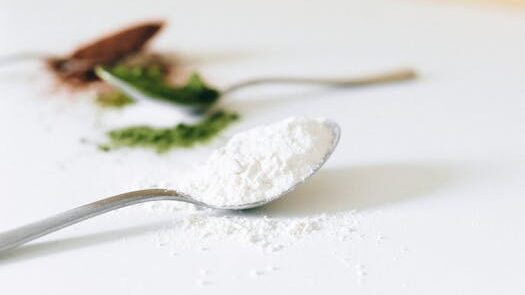
Cream of tartar is an acidic leavening agent. It reacts with baking soda to create carbon dioxide and makes baking recipes rise when cooked. It’s an essential ingredient in our homemade baking powder and in store-bought varieties.
Cream of tartar is not creamy or tartar, it’s a white powder made from ground tartaric acid crystals. These crystals form as a byproduct of wine making. Potassium tartrate is an acid found in high amounts in grapes and gives grapes their tart flavor.
When grapes are pressed for juice to make into wine, the potassium tartrate is one of the chemical components that are pressed out, too. The crystals form on the insides of the wine barrels. After the wine is poured out, the crystals are scraped off, dried out, and ground up into cream of tartar.
Cream of tartar has a tart flavor and is considered similar to lemon juice in baking.
Baking Soda
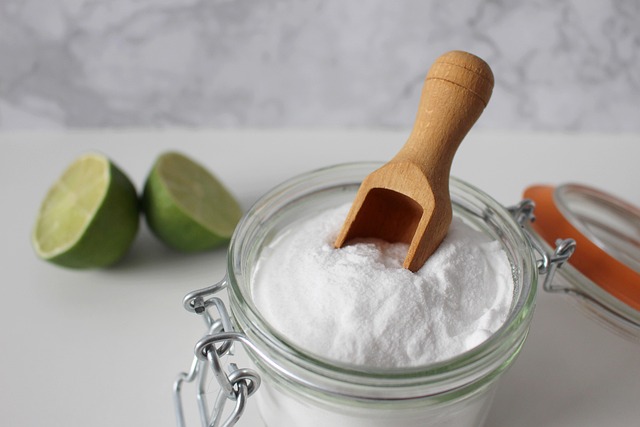
Baking soda, a leavening agent known by its scientific name of sodium bicarbonate, is an alkaline salt and bicarbonate anion. When used in baking, it reacts with the acidic component(s) in a recipe to make carbon dioxide.
Baking soda can cause baked goods to rise on its own, just by being heated up, but it tends to give baked goods a bitter, salty flavor and a yellowish color. Also, when it doesn’t have an acid to react to, it makes half as much carbon dioxide gas, so the baked goods only rise half as much as it would with an acid.
That’s why baking powder needs both baking soda and cream of tartar – with a lesser amount of baking soda needed to get a good, tall rise, the two react together and cause the recipe to rise light and fluffy, while keeping a neutral taste and white color.
When the baking soda, cream of tartar, and arrowroot powder are combined together, they create a perfect baking powder with zero harmful aluminum additives. Now, you can be confident using your homemade baking powder in all of your favorite cakes, cookies, muffins, biscuits, and other quick rising baking projects!
I hope you’re getting ready to make your own batch of this fantastic DIY, aluminum free baking powder!
Once you try it, I know you won’t ever want to go back to the store-bought, mass-produced version… it’s so much easier and healthier to just make your own!
If you’ve had success with this recipe, please feel free comment below and let me know how it worked for you!
To all of our great baking successes, and the joy that comes with them!
Love,
Cariel
Sources:
Arrowroot. (chapter of) Book: Vegetable Root Science. M.K. Rana. CRC Press. 2017. Retrieved February 19, 2026.
Arrowroot. Wikipedia. Updated January 30, 2026. Retrieved February 19, 2026.
Arrowroot | Tuber, Edible Starch & Culinary Uses. Britannica. Retrieved February 19, 2026.
Functional and Nutritional Properties of Various Flour Blends of Arrowroot Starch and wheat Flour. Asian Food Science Journal. 21(6): 12-25. Mutlong, Aaron, et. al. 2022. Retrieved February 19, 2026.
Overview of the Relationship Between Aluminum Exposure and Human Health. Springer Nature Link. Niu, Qiao. July 09, 2023. Retrieved February 19, 2026.
Physicochemical properties of flours and starches derived from traditional Indonesian tubers and roots. Journal of Food Science and Technology. Pub Med Central. Aprianita, Aprianita., et. al. 51(12):3669–3679. January 10, 2013. February 19, 2026.
The impact of aluminum exposure on human health. Archives of Toxicology. 97, 2997–2998. Springer Nature Link. Bonfiglio, R., et. al. August 19, 2023. Retrieved February 19, 2026.
The-Toxicology-of-Aluminum-in-the-Brain-A-Review.pdf. NeuroToxicology, 25(5): 2000. Yokel, Robert A. Retrieved February 19, 2026.
The Quality of Commercial Cream of Tartar. Kansas Academy of Science on JSTOR. Havenhill, L.D., Vol. 19 (1903 – 1904), pp. 66-68. December 30, 1904. Retrieved February 19, 2026.
What is Cream of Tartar: Uses, Substitutes and Recipes. McCormick. May 28, 2025. Retrieved February 19, 2025.
Sodium Bicarbonate (S300) Batch Numbering and Shelf Life Statement. Solvay Chemicals, Inc. Retrieved February 19, 2026.
Leave a Reply