Hi friends!
So, today, I’m making oregano oil in my kitchen, and I wanted to share the process with you because oregano oil is such a powerful and useful home remedy to have on hand.
Oregano is an incredibly powerful medicinal herb and I use it all the time! It’s one of my top go-tos for first aid and cleaning because it kills bacteria, viruses, and mold.
Personally, I’m very sensitive to mold. It makes me so sick. And as a retired elementary-school educator, there have been occasions uncounted when I needed a natural germ-killer that would work fast when I got sick – and to disinfect surfaces around the house.
Oregano oil is one of the best germ-fighters that I know of and you must have it on hand in your battle against sickness and germs in your life, too!
Quickly, a couple of disclaimers:
(As an Amazon Associate, I earn from qualifying purchases.) I am not a medical professional so please do your own research.
Okay, let’s get started!
Homemade Oregano Oil Recipe
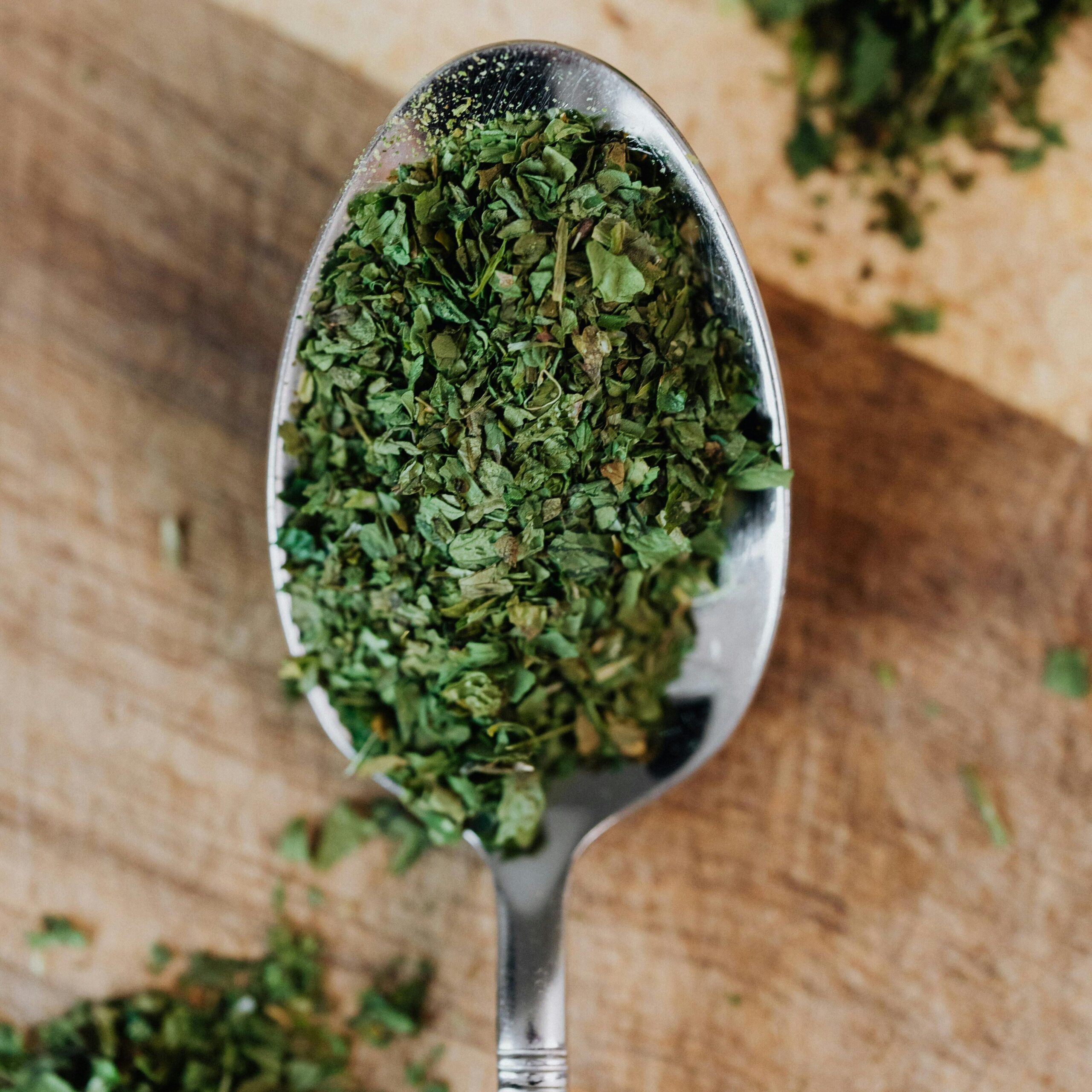
You’ll need oregano https://amzn.to/3NMnlqk
- a carrier oil that you want to infuse https://amzn.to/3YFKLjz
- a clean, sterilized glass jar https://amzn.to/4sO13ov
- a crockpot and water https://amzn.to/4sFAEJn
- a piece of cheesecloth https://amzn.to/4b0D2UK
- a bottle to store your oil https://amzn.to/45VPxgL
(As an Amazon Associate, I earn from qualifying purchases.) Additionally, I am not a doctor or health physician, and the advice given here should not be used in place of professional medical advice. Please do your own research.
Step one: measure your oregano and crush it up a bit.
If you’re using fresh oregano, you’ll want to use a 1:1 ratio of herbs to oil – equal parts oregano to oil.
If you’re using dried oregano, use a 1:3 ratio of herbs to oil – that would be one part herbs to three parts oil. (I’m using my favorite USFDA certified organic dried oregano from Mountain Rose Herbs!)
Once you’ve got your oregano measured out, crush it a little bit. Use a mortar and pestle, a rolling pin, or even a spoon in a bowl… whatever you have will work just fine. https://amzn.to/45bdHDK
(As an Amazon Associate, I earn from qualifying purchases.) I am not a medical professional so please do your own research.
(If using fresh herbs, you can cut the herbs into small pieces, but bruise them up a bit, as well.)
Caution: do not powder or pulverize the oregano, though, as that will yield a less potent oil… Just crush it a little to release the essential oils from the structures of the plant material.
Step two: Put your herbs in the glass jar and cover with your oil of choice.
This is simple. Just put the oregano into the glass jar, and cover with oil.
If you want to mark the level of the herbs on the outside of jar before adding oil, you can, just in case the oregano floats and it’s hard to get an exact measurement.
Step three: Simmer the oil and oregano mixture until infused.
Set the jar of oregano and oil into your crockpot and add water until it’s about 3/4-1inch below the top of the jar. Set the crockpot to low. Let the oil simmer in the water for several hours – until the oil has turned a dark green color and smells strongly of oregano. (It’s not hard to tell when it’s ready!)
You can also simmer the oil in a pot on the stove, or in double boiler (or a bowl/pot set over a pot of boiling water.)
Using a crockpot or double boiler is the best option, though, because the water begins to evaporate at a steady temperature that is low enough that it will not allow the oil to get too hot.
Getting too hot will destroy the medicinal compounds in the oil. Do not let the oil boil or burn!
Important tip: Leave the lid off of the jar and the crock pot uncovered while the oil simmers. You don’t want water to condense into droplets on the lid and fall back into the oil because water (moisture) will cause the oil to spoil or grow mold on the surface, and then you’ll need to throw it out.
Step four: decant your oil.
Now that your oregano oil is nicely infused with all of the herb’s wonderfully nutritious and medicinal properties, it’s time to bottle it!
First, let the oil cool down completely. Then you can either:
Put a clean, dry lid on the jar you simmered your oil in, leaving the herbs in the oil, and store in a cool, dry place. If you decide to leave the herbs in the oil, it will continue to strengthen slightly in storage.
Or.
You can strain the herbs out using a piece of cheesecloth (or similar). Then bottle the oil. If you decide to store your oregano oil in its own jar or bottle, it’s best to use a dark brown or dark green glass container, because this will keep light from reaching your oil and breaking down its medicinal compounds.
Once your oregano oil is in its bottle, store it in a cool, dry, dark place and use as needed!
Making Your Own Oregano Oil FAQs
Congratulations to us!! We’ve made our own homemade oregano oil! (Happy dances around the kitchen!!)
Now, let’s talk about some additional information and questions that you may have!
How Do I Use Oregano Oil?
Most of us recognize it from the kitchen as a favorite culinary herb around the world… and actually, it was first used by Greek and Roman people for medicine, instead of seasoning.
And that’s not surprising. There are many different varieties of oregano that grow around the world, especially in the Mediterranean, and they vary widely, genetically. Still, all of the varieties of oregano contain chemical compounds that are useful antivirals, antibiotics, and antioxidants.
**Warning: Oregano oil is a strong oil. If you use directly, you’ll find it burns pretty badly and irritates the skin. It can also be irritating to the mouth, throat, and gut if swallowed undiluted or if you swallow too much. Do not get it in the eyes. Be sure to dilute oregano oil when you’re ready to use it.**
To get the most and best use out of your homemade oregano oil, here are some great tips for how to use it:
Topically:
It’s common to use oregano oil on your skin to prevent or treat bacterial or fungal infections (think yeast infections, wound care, or acne). It’s also a good anti-inflammatory, so rubbing the diluted oil on stiff joints and sore muscles can be helpful, as well.
To use topically, dilute the oregano oil in a carrier oil and rub it on the affected area a few times per day, or as needed.
(As an Amazon Associate, I earn from qualifying purchases.) I am not a medical professional so please do your own research.
A good ratio is 2%-3% diluted, which equals 2-3 drops of oregano oil mixed into one teaspoon of a carrier oil. Good choices for a carrier oil are olive oil, avocado oil, jojoba oil, or coconut oil.
Internally:
Oregano oil’s medicinal qualities mean it can help with problems in many of the body’s systems.
Oregano oil kills bacteria and viruses that cause upper respiratory infections, and it’s useful in opening up the sinuses and respiratory passages. To use it, simply take a whiff of the oil, put a few drops in a diffuser, or rub a little bit of diluted oil on the chest or the upper lip of a person whose air passages are clogged.
Oregano oil can also help soothe and heal lip and mouth sores and regulate the gut biome (in addition to regulating inflammation in the body). So, anyone wrestling with gut and digestive problems will often find oregano oil very helpful in controlling and healing those issues.
I am not a medical professional so please do your own research.
To take oregano oil internally, simply dilute the oil in either a carrier oil or water, and swallow it.
Just a caution: Swallowing oregano oil can be a little rough. The oil seems to stick to the injuries or inflamed areas, and it burns. This is good, because it goes straight to work where it’s needed and will kill the infection quickly, but it is uncomfortable… However, it works very, very well. And, often, the oil will also have a numbing effect that helps take the edge off of the burning feeling of the oil, and the pain from the original irritation.
I am not a medical professional so please do your own research.
For Cleaning:
To use oregano oil to clean and disinfect your home or surfaces, simply mix several drops into your own homemade cleaning mixture and use as normal. You can also simply put a few drops of the oil into a spray bottle of water and use it that way!
My favorite home cleaning solution is:
Why Make Your Own Oregano Oil?
There are lots of reasons to make your own oil.
High quality, store-bought oregano oil is expensive.
While the cost is usually justified when you’re trying to live a naturally clean and healthy lifestyle, there’s also no reason to spend tons of money on simple remedies you can make yourself. (The price of one bottle of essential oil can easily cover the cost of the materials you’d need to make several recipes’ worth of the same product at home.)
You learn invaluable skills.
Beyond saving money, many of us who make our own products at home do so because we want to learn how to do things ourselves. Not only do we learn the process, we also learn the subtle differences in how to adjust our recipes to create exactly what we want, at the strength we want it to be, and how to do so based on natural variances that come from nature itself. There’s so much value in creating what we need, and in the mistakes that teach us what not to do, as well. It’s a wholesome and enriching experience to learn to make your own medicines at home!
You control the recipe.
Additionally, it’s important to make our own remedies because then we know exactly what is, and what isn’t, in the products, foods, and medicines we’re using on our bodies and throughout our homes.
Speaking of what is and isn’t in our recipes…
What Type of Oregano Should I Use to Make Oregano Oil?
There are many types/varieties of oregano. Common Oregano, Origanum vulgare L., is – as the name implies – the most commonly grown and used around the world. It is your best bet when making oregano oil, and is usually the variety you’ll buy if you purchase oregano online or in-store.
There are also several subvarieties of common oregano that you can use. Two of these are Golden Oregano (Origanum vulgare ‘Aureum’) https://amzn.to/3NjQpFG and Greek Oregano (Origanum vulgare ‘Hirtum’) https://amzn.to/3LM7kAc. They make excellent oregano oil that has all of the properties you’re looking for, as well! Just do some research, and choose what variety you want to use if you decide not to use common oregano.
(As an Amazon Associate, I earn from qualifying purchases.) I am not a medical professional so please do your own research.
No matter what kind of oregano you decide to use, it’s important to use one that’s organically grown. You can either purchase a dried, organic oregano, or you can grow your own!
Side note: Oregano is a beautiful herb to grow. It makes beautiful little flowers that are a fantastic source of nectar and pollen for the insects in your ecosystem. Oregano will attract many varieties of bees and butterflies, as well as other native pollinators that live nearby, so if you can, please grow oregano. It’s good for everyone!
Should I Use Dried or Fresh Oregano?
Whether you use fresh or dried oregano (and any other herbs you want infuse) is purely up to you, and what you have to work with.
That said, it’s a good idea to use oregano with the least amount of water that you can. Moisture can cause your oil to spoil or mold. (The bacteria that cause spoilage and/or mold spores live off of the water in the jar, if it’s there.)
So, it’s best to use dried herbs. If you don’t have dried herbs on hand, then let your oregano wilt for a few hours, if you can. This allows a good deal of the water in the plant material evaporate away.
You can also dry it in an oven set to its lowest temperature, in a dehydrator, or hanging upside down in a paper bag. This will take from a couple of hours in an oven, to a few days air-drying. Just be careful not to burn your herbs!
What’s the Best Oil for Making Oregano Oil?
You can use any neutral, natural oil that you want to make your oregano oil… Just choose your favorite, or even make a few different ones!
I use avocado https://amzn.to/4sHqXKs oil because I’m allergic to olive oil – avocado oil makes a lovely oregano oil for me. But olive oil makes a great oregano oil base, too.
Will Oregano Oil Harm My Pets or Family?
In general, no. Oregano oil is not specifically harmful to pets or people, and even a moderate amount is not a cause for worry.
But, as stated above, it is a very strong oil, and can be dangerous when undiluted or when taken in large amounts.
If anyone you love gets into your undiluted oil, wash off as much as you can with lukewarm water and mild soap. Remember that the oil spreads easily on hands or skin and will transfer easily when people/pets rub it to try to make it stop burning. Be sure to wash all affected areas as well as you can. Expect the redness and irritation to last up to a couple of hours. You can try using a soothing, cooling lotion or cream on the affected area, if you have it.
If anyone you love swallows a dangerous amount of undiluted oregano oil, they might have abdominal pain, start vomiting, having diarrhea, and may become lethargic. They also may have respiratory distress if there’s a lot of oil in their throat and can’t help but to inhale the fumes… In this event, get medical help as fast as you can.
As long as you keep it in a tightly closed container, and put away in a safe place, your family members and your pets will only come in contact with it after you’ve diluted it and are using it safely for cleaning or healing.
Safety, common sense, and sound judgment are the keys when using oregano oil.
How Long Does Oregano Oil Last?
If you store your oregano oil properly – that is in a cool, dry, dark place with the lid on securely – oregano oil can last years. Things that will ruin your oil are heat, light, moisture/water in the oil, and exposure to the open air.
Also, oregano oil doesn’t necessarily go “bad” so much as lose potency over time. Typically, homemade oregano oil has a shelf life of up to 12 months.
You can tell if your oregano oil has spoiled if:
- it has a musty, stale smell instead of its normally sharp, clean, herbal scent,
- if the color changes from a clear, dark amber color to murky or cloudy
- if there is mold growing on the surface of the oil.
If you see any sign that your oregano oil has gone rancid, discard it and make a fresh batch!
Did you make your own oregano oil?
It’s a lovely, exciting step in becoming independent, self-sufficient, and well-stocked on your natural health journey!
If so, please leave a comment with all the details on how your experience went, what you did or didn’t like, and any questions you may have. I can’t wait to hear from you!
To your great health and happiness,
Cariel
Sources:
An overview of medicinal properties of oregano (Origanum vulgare L.). Iranian Medical Plants Technology. Mojahed, Samaneh. April 2024. Retrieved December 20, 2025.
Essential Oils of Oregano: Biological Activity beyond Their Antimicrobial Properties. Molecules. Essential Oils: Chemistry and Bioactivity. Leyva-Lopez, Nayely, et al. June 13, 2017. Retrieved December 20, 2025
Full article: Effect of Fractional Crystallyzation on Composition and Thermal Behavior of Coconut Oil. International Journal of Food Medicine. Marikkar, J.M.N.. May 09, 2013. Retrieved December 20, 2025
Handbook of Food Products Manufacturing – Nirmal K. Sinha – Google Books. Hui, Y.H.. John Wiley & Sons, Inc., Hoboken New Jersey. 2007. Retrieved December 20, 2025.
6 Major Side Effects Of Oregano Oil You Must Know. Style Craze. Tadimalla, Ravi Teja. March 25, 2025. Retrieved December 20, 2025.
Leave a Reply