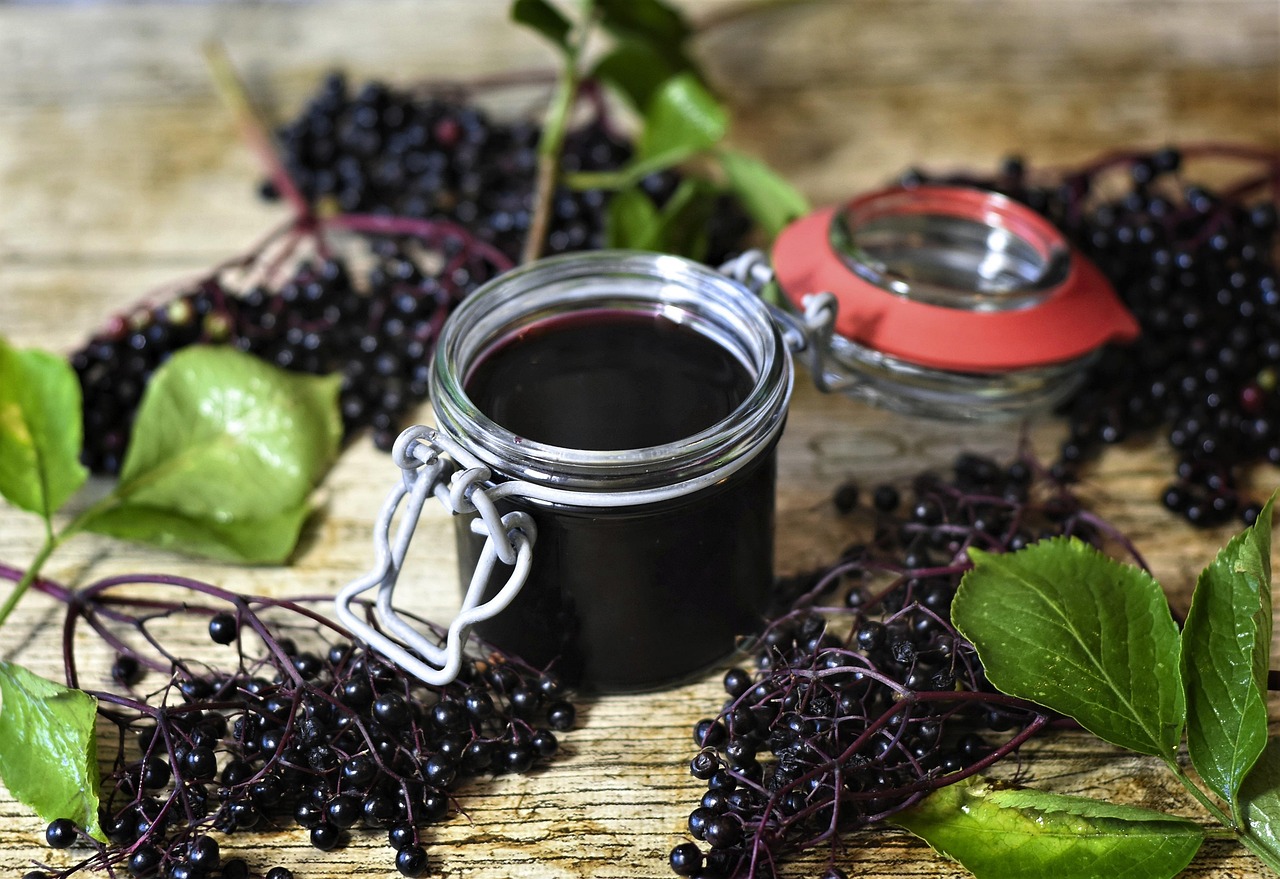
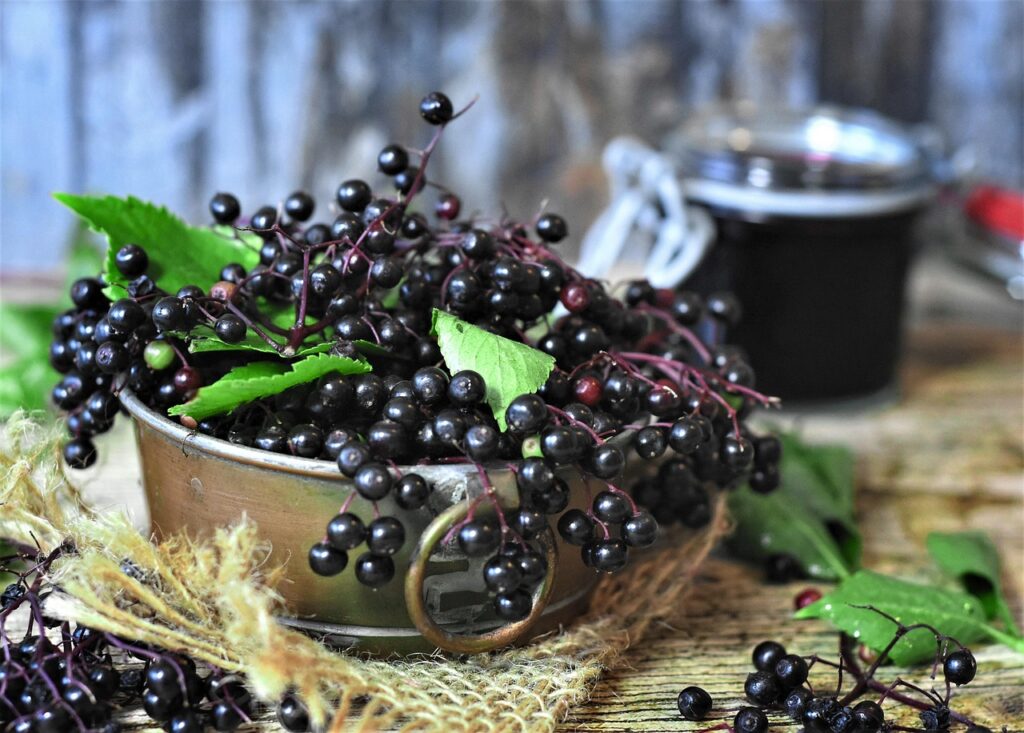
I’m sure you’ve heard of elderberries, seen extracts and gummies, and maybe even seen them growing on the side of the road or near waterways around your community… But you may not know just how great they are for keeping a body healthy, or how to use them yourself!
So, that’s what I’m sharing today!
How elderberries boost our health and how to make your own homemade elderberry tincture and elderberry syrup.
Let’s jump right in!
(As an Amazon Associate, I earn from qualifying purchases.) Additionally, I am not a doctor or health physician, and the advice given here should not be used in place of professional medical advice. Please do your own research.
Why are Elderberries SO Good for Our Health?
Elderberries have a long and rich history of use by people for food and medicine. Historically, all parts of the plants have been used, especially the flowers and berries. Today, we’re focusing on the berries.
Now, before we go any further, it’s important to note that the uses of elderberries – and of many medicinal herbs – has not been scientifically proven, either because there has not been enough study in these areas yet, or because the relationships simply have not been scientifically established…
That does not mean that these medicines are not incredibly powerful for preventing or healing sickness and supporting the body’s health and natural functions.
Generations upon generations worth of folk medicine has proven many of these natural medicines to work in holistic, whole-body ways, and the wisdom of these ancient healing methods are well worth learning and practicing… Especially as modern lifestyles are unhealthier and chemically contaminated in ways that are unprecedented in Earth’s history.
Here, I’ll highlight the most popular uses for elderberry, but there are many, many more and I highly encourage you to research further and add elderberries to your natural health regimen!
Their Color Signals Medicinal Properties
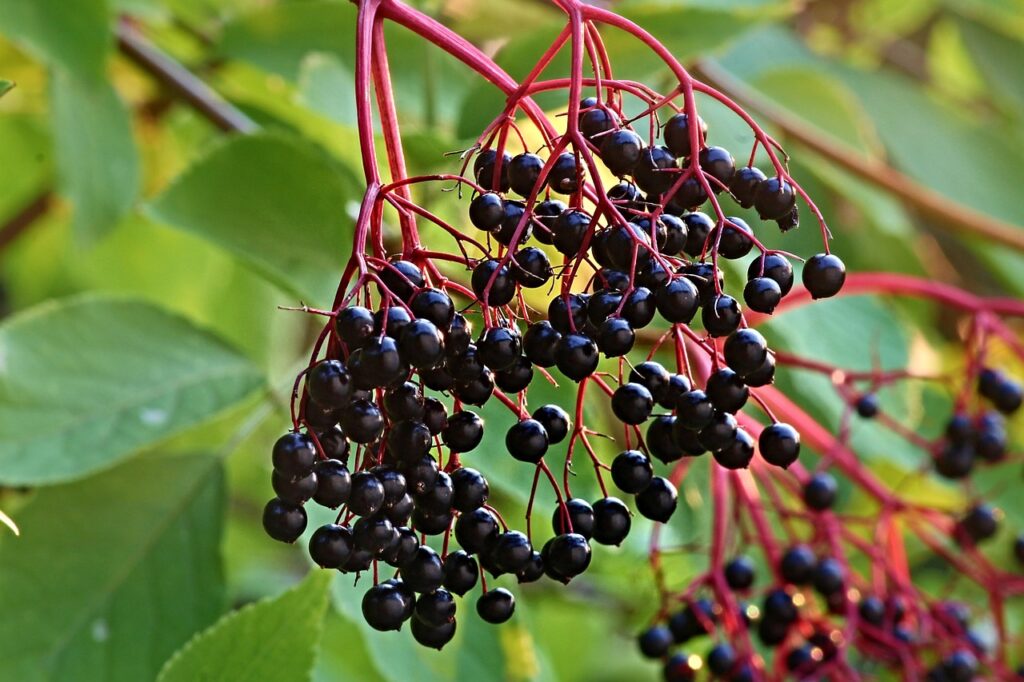
The deep purple-black color of elderberries is beautiful, making them wildly appealing to people, other herbivores, and birds. And, indeed, they do taste delicious! Their color also signals to us that they are good for us, and that is not by mistake.
Elderberries are Rich in Antioxidants
Elderberries offer one of the highest concentrations of anthocyanic pigments and phenolic compounds of any fruit in the world. This is important because these compounds are powerful antioxidants that help the body neutralize and clear out free radicals.
Free radicals are chemical compounds that our bodies create to fight against all sorts of chemical and physical damage that occurs constantly within us. These free radicals are produced constantly, and if they build up past a certain level, they actually begin to do their own damage to our cells and DNA.
If you want to boost your intake of antioxidants, elderberries are your best friend!
Elderberries Are Powerful Antivirals
There is a large body of scientific evidence proving that elderberries prevent and control viral infections.
Famously, elderberries work to control upper respiratory infections like the common cold, the flu, and COVID-19. People who use elderberry extracts to fight sickness describe how they’re able to fight off the infection before it gets a good hold on them, or that the elderberries made the sickness easier on their bodies and that they’re able to recover faster.
There are many studies that support these findings, showing that elderberries can reduce the length of a flu infection by 3-4 days…
It’s really very fascinating! The studies have shown that the bioactive compounds in elderberries actually prevent the germs from getting inside of the cells of the throat and sinuses, preventing the infection from spreading!
Elderberries have also been used to control other viruses, such as HIV, as well.
Elderberries are Incredible for Gut Health
Thanks to the almost unmatchable levels of polyphenols present in elderberries, they’re able to address many of the struggles our digestive systems face.
They are especially helpful as prebiotics. This is an important point because they feed some of the most important strains of bacteria in our gut!
When you have a healthy gut biome, your body is able to properly digest your food and extract the nutrition from it. It also means that your intestines move in their typical peristalsis, wave like motion. This prevents the constipation and bloating that is so common today, thanks to our modern, chemical-heavy foods.
The flavonoid anthocyanin mentioned above also helps strengthen and protect the mucous lining of the gut. This means that toxins and waste in your food stay in the intestinal tract and are passed from the bowel instead of leaking into your bloodstream.
A leaky gut causes brain fog, severe fatigue, and skin breakouts because the body’s systems are overloaded with these toxins. Eventually, the overload turns dangerous by causing obesity, cancers, diabetes, and overworking the liver as it tries to breakdown and process out the toxins that should have left the body in the stool.
By nourishing a healthy microbiota in your gut, you keep one of your body’s most important functional systems fit and able.
How to Make Elderberry Extracts
There are many, many preparations of elderberries that you can buy or make that are easy and tasty!
The two that I’m going to focus on are the elderberry tincture and elderberry syrup. I like to use both of these because they’re easy to make at home, have a long shelf life, and deliver the power of the berries straight to your body.
To make these extracts, you’ll need a good-quality source of elderberries. There are many varieties of elderberries that you can find growing wild, or you can grow or buy them. The most common types you’ll encounter are European elderberries (Sambucus nigra L.) or American Elderberries (Sambucus canadensis L.).
American Elderberries are native to the eastern United States and are easy to find growing on the edges of fields, roads, and woodlands and alongside waterways.
If you harvest your own berries, just know that they all ripen within a rather short, two-week window in later in the summer, so figure out where the elderberry plants grow in your area early, and be prepared to go check and pick them as they get ripe during that time!
How to Make an Elderberry Tincture
A tincture is an excellent choice for extracting all of the wonderful medicinal properties from the elderberries.
To use an elderberry tincture, add about 1/4 teaspoon, or 20 drops from a dropper, mixed into a cup of water and drink it. The water can be any temperature that you like. Repeat this dose three times per day. It is also safe for children.
You can also take the tincture directly, by putting it in your mouth under your tongue, holding for about 20 seconds, and then swallowing.
Take elderberry tincture three times per day, beginning as soon as you start to feel sick, or as a preventative measure when an illness is going around.
The ingredients are simple: alcohol (I use 80 proof vodka) and elderberries .
You’ll also need a sterile glass jar with a tight-fitting lid. A mason jar is a popular choice, and I use mason jars, myself.
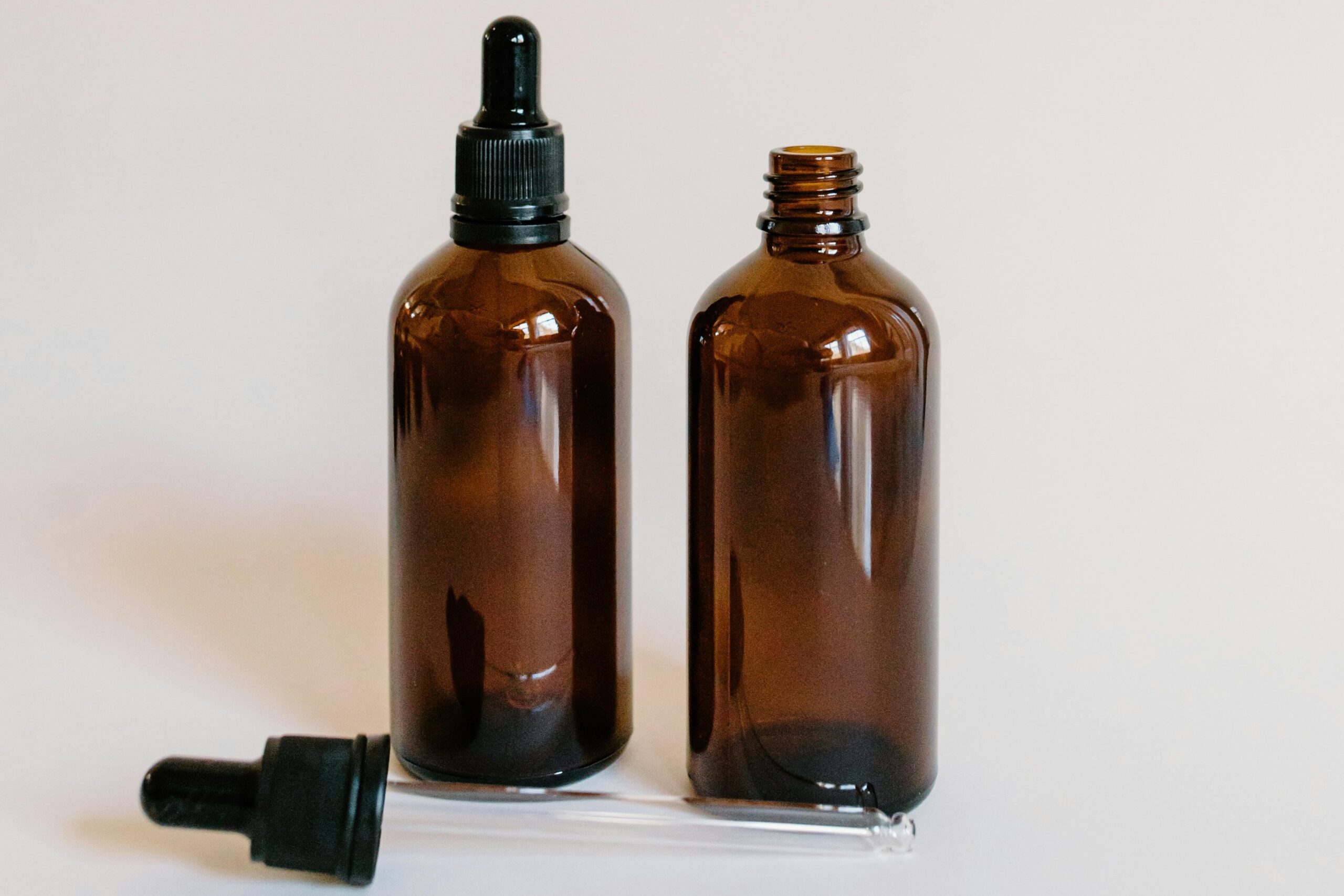
Amber or green 2 oz bottles (with or without droppers) to bottle your finished tincture.
(As an Amazon Associate, I earn from qualifying purchases.) Additionally, I am not a doctor or health physician, and the advice given here should not be used in place of professional medical advice. Please do your own research.
Elderberry Tincture Recipe:
If you’re using dried elderberries, fill the jar at least 1/4 way full of berries.
If you’re using fresh elderberries, fill the jar at least 1/2 way full of berries.
The difference is the water content – dried berries have all of the potency of fresh berries, but take up about half the space. So, if you use fresh berries, you’ll want to add about twice as many than dried ones to get a good, strong tincture.
It’s a good idea, but not necessary, to chop the elderberries before adding the alcohol.
Now pour the alcohol you’re using over the berries and fill the jar to the top, and put the lid on securely.
If you’ve used a clear glass jar, you’ll want to store it in a cool, dark place while the elderberries infuse into the alcohol. Light will break down the medicinal compounds in the tincture.
Let the alcohol infuse for 6-8 weeks, shaking it every couple of days to mix it well.
Once the tincture is fully infused, strain the berries out of the liquid.
A funnel with a few layers of cheesecloth (or other loosely woven, natural fiber cloth) works great to strain the tincture.
Bottle your elderberry tincture in a dark green or amber glass jar to keep it fresh. It does not need to be refrigerated, and should last for up to a couple of years as long as it’s not stored open to the air or in direct light.
You can keep all of the tincture in one big jar that you use to refill a smaller bottle with a dropper, or you can store all of your tincture in several small bottles with droppers, if you like. The droppers are not essential, but they are useful for measuring and easily taking the tincture when you need it! If you don’t use bottles with droppers, a spoon works perfectly well.
The Elderberries and the Alcohol
The alcohol in a tincture serves two purposes: first, it is able to dissolve and extract the different components in the plant. This is especially helpful when oil-based components won’t extract using water. Second, the alcohol is essential as an antimicrobial – it prevents bacteria and mold growing in your tincture.
Therefore, whether you’re using fresh or dried elderberries will dictate how strong of an alcohol you choose.
To tell how pure an alcohol is, look for the the ABV, or Alcohol By Volume. The Proof of an alcohol is double the ABV number, so an 80 Proof spirit is equal to 40% ABV.
Dried elderberries will need an alcohol of 40% – 50% alcohol content, or 80 – 100 Proof. Some common options are vodka, whiskey, and rum… but any alcohol that you want to use will work, as long as it has a high enough alcohol content.
Fresh elderberries need a strong spirit because the water in the berries can cause your tincture to spoil if there’s not enough alcohol to prevent the growth of mold and bacteria. The water will also dilute the final tincture down a bit, so lesser alcohols will become too diluted to work at preventing the mold and bacteria growth.
A good alcohol content for tincturing fresh berries is 95%-plus ABV, or 190-plus proof. This is nearly pure alcohol, and that level of purity is both harder to find and more expensive. (The good thing is that once you’ve bought it, you shouldn’t need to buy more for a long time!)
Your options for finding it are to shop around. This article by Food & Wine is a good starting point. You may want to call distilleries directly and see what they have to offer, too.
Remember, whatever alcohol you decide to use will affect the taste of your tincture. It’s not a bad idea to use a neutral flavored alcohol, like a good vodka, to start with. You can also experiment with different alcohols to see what you like best.
**Do not use rubbing (isopropyl) alcohol to make your tinctures. Rubbing alcohol is for external use only and can be deadly if swallowed.**
How to Make Elderberry Syrup
Elderberry syrup is super simple to make and delicious tasting, too! This is a great preparation to use with children because they like it!
To use elderberry syrup, adults take 1-2 teaspoons of the syrup every 4-6 hours beginning as soon as you begin to feel even a little bit sick.
Children 12-up take 1 teaspoon three times a day, beginning as soon as they feel even a little bit sick or “look or feel off.”
Babies older than 1 year old – half of a teaspoon three times a day as soon as you notice them looking or feeling “off,” including pale, listless, or sleeping way more than they normally do.
For babies under one year, use a syrup that has no honey in it. Give babies 1/4 teaspoon two-three times per day.
(Honey might contain botulism spores and can cause botulism poisoning in infants. Though this is incredibly rare, it’s generally advised by the medical experts that parents not risk it.)
First take a couple of cups of elderberries (again, you’ll need to use more fresh berries than dried ones) and cover with water in a pot.
A good ratio is two cups of elderberries to three cups of fresh, clean water.
Bring the pot to a simmer (but not a full boil) over medium heat. Cover the pot, but keep it tilted to vent the steam a little bit.
Simmer for about 40 minutes. Mash up the berries in the last ten minutes or so of cooking.
Take the simmered elderberry concoction off of the heat and allow it to cool completely. (Like, completely cool – warm is not cool enough.)
Strain the berries from the liquid through a cheesecloth into a mason jar. Try to squeeze out as much liquid as you can. Compost the leftover berry material.
Now add 3/4 cup of organic raw honey to the elderberry juice. (Try your best to find a locally raised honey, if you can!) It’s important for the juice to be cool so that the healing properties in the honey are not destroyed by any heat.
(As an Amazon Associate, I earn from qualifying purchases.) Additionally, I am not a doctor or health physician, and the advice given here should not be used in place of professional medical advice. Please do your own research.
Stir the honey until it dissolves and mixes into the juice completely.
Last, put the lid on your jar and keep it in the refrigerator. The elderberry syrup will last in the fridge for several weeks – just check it for signs of mold, fermentation, or spoilage as it ages before you take it.
If you want to add some additional flavor and medicinal benefit to your elderberry syrup, you can add two or three cinnamon sticks and a teaspoon of cloves at the same time that you add the berries.
Are Raw Elderberries Dangerous?
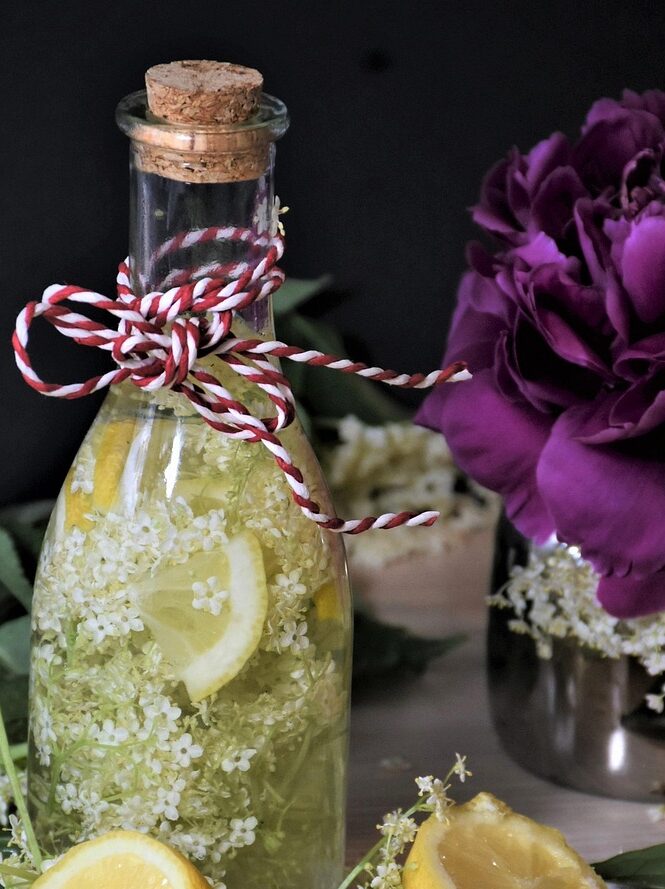
In short… not really, but they can be if you eat too many.
It’s common advice to totally avoid eating raw elderberries because there is a risk. People are prone to advise that we completely avoid something if it can be dangerous in any way… but that approach is a bit misleading.
Let me explain…
Elderberry plants and berries contain cyanogenic glucosides.
(Though they sound similar, these compounds are totally different and separate from the anthocyanins that are responsible for giving plants of all kinds their red, pink, purple, blue, or black colorations. Anthocyanins are totally harmless flavonoids and their high concentration in elderberries is one reason they’re so beneficial for our health.)
Cyanogenic glucosides are naturally occurring chemicals (that are found in elder plants) and release the poison hydrogen cyanide when crushed up and during digestion… Yes, cyanide.
While this sounds incredibly dangerous, it’s not quite what it seems.
First off, the cyanogenic glucosides are concentrated in the raw stems and leaves of the elder plants. The elderberries have very low amounts of cyanogenic glucosides in them, though they are present. It’s also important to note that they are present, but that’s just one part of many things that the stems and leaves contain in them. The stems and leaves are not purely poisonous, either.
(Cyanogenic glucosides are also found in the seeds and pits of many favorite fruits – including apples, apricots, peaches, and many others!)
Also, there are many varieties of the elder plant. Varieties of red and white elderberries are not edible. The black-colored varieties are.
It is not a good idea to eat a bunch of the black-colored fruit raw. But, a small-to-moderate amount will not hurt you.
In fact, instances of elderberry poisoning are very, very rare, and usually include people adding the leaves or stems to the mixture that they ate or drank.
(People have used all parts of the elder plant for medicines since ancient times. The ancient practitioners would’ve been aware of the poisonous component of elder and would have adjusted their recipes to avoid danger while providing healing.)
The key to all this is that cooking or processing the elderberries changes their chemical makeup, so when processed, they are completely safe.
Besides being used in extracts for natural medicines, elderberries are usually used in cooking. They’re favorites in pies, jellies, cobblers, and to make wine. Elderflower wine is especially popular in Europe, and again, the cyanogenic glucosides are destroyed in the process.
So, ultimately, if you found some ripe elderberries and couldn’t resist popping a few in your mouth, there’s no need to worry. Just know the risk of eating too many and proceed with caution and knowledge in the future!
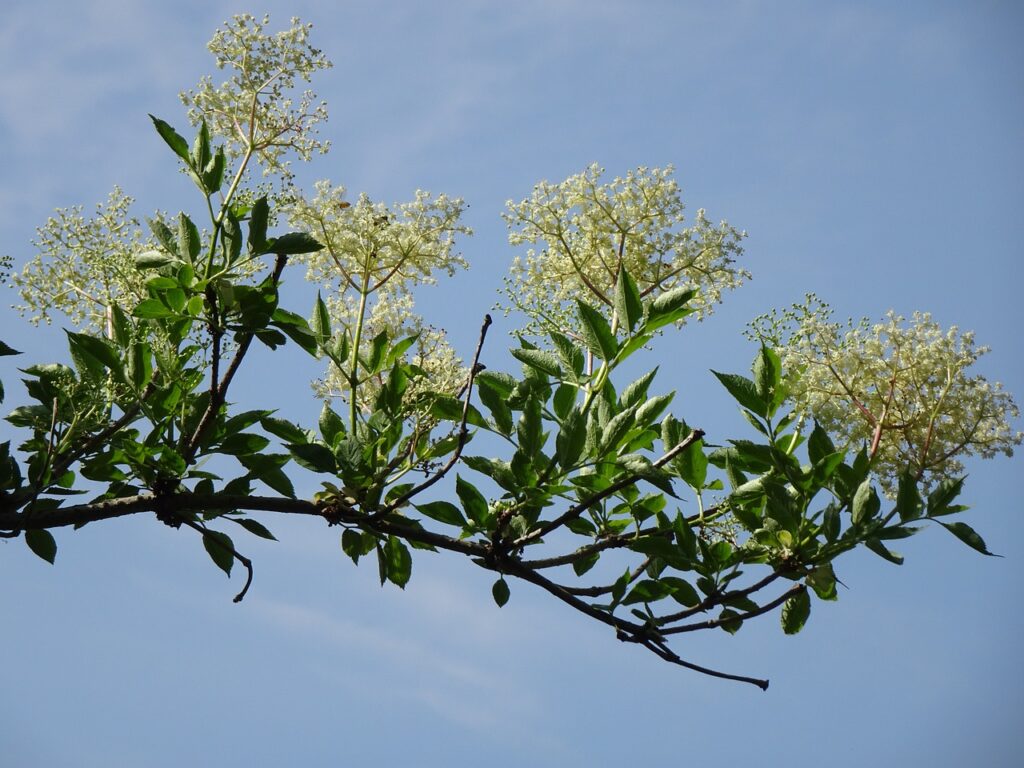
I hope you’re getting your stuff together to make your elderberry extracts now so that you’re prepared for any colds, flus, or other viruses before they strike!
I also want you to understand how wonderful elderberries are for supporting the health of all of your family members, no matter how young or old they may be… In fact, the better you can protect the most vulnerable, the safer they’ll be!
If you’ve made an elderberry tincture or syrup yourself before, and if you have any awesome tips to add, please drop a comment below for everybody to use, learn from, and enjoy!
And, as always, thank you so much for joining me here on this profound, joyful, and natural healing journey. I’m so happy to have you by my side!
To all of our great health and happiness,
Cariel <3
Sources:
Anthocyanins protect the gastrointestinal tract from high fat diet-induced alterations in redox signaling, barrier integrity and dysbiosis. ScienceDirect. Redox Biology. Cremonini, Eleonora, et. al. Volume 26. September 2019. Retrieved February 15, 2026.
Benefits of polyphenols on gut microbiota and implications in human health. ScienceDirect. The Journal of Nutritional Biochemistry. Cardona, Fernando, et. al. July 11, 2013. Retrieved February 15, 2026.
Elderberry. Journal of Primary Health Care. Volume 13, Issue 1. March 2021. Retrieved February 15, 2026.
Elderberry as a Medicinal Plant (PDF). Issues in new crops and new uses. Charlebois, D. ASHS Press 2007. Retrieved February 15, 2026.
Elderberry for prevention and treatment of viral respiratory illnesses: a systematic review. BMC Complementary Medicine and Therapies. Springer Nature Link. Volume 21, article 112. April 07, 2021. Retrieved February 15, 2026.
European elderberry (Sambucus nigra L.) and American Elderberry (Sambucus canadensis L.): Botanical, chemical and medicinal properties of flowers, berries, and their products. University of Ljubljana, Biotechnical Faculty, Department of Agronomy, Jamnikarjeva 101. Valentina Schmitzer, et. al. 2012. Retrieved February 15, 2026.
Honey and other environmental risk factors for infant botulism – ScienceDirect. Journal of Pediatrics. Arnon, Stephen S. M.D., et. al. Volume 94, Issue 2. February 1979. Retrieved February 16, 2026.
Infant botulism and honey in Europe: a commentary. The Pediatric Infectious Disease Journal. Paolo, Aureli PhD., et. al. September 2002. Retrieved February 16, 2026.
Intestinal Barrier and Permeability in Health, Obesity and NAFLD. Biomedicines (2022). Portincasa, Peiro, et. al. December 31, 2021. Retrieved February 15, 2026.
perennialfruit_final_2018.pdf (26.02 MB) (downloadable report PDF) Perennial Fruit, New, Unusual, and Unique Crops for Northern Climates. McCamant, Thaddeus, et. al. Minnesota Institute for Sustainable Agriculture. 2018. Retrieved February 16, 2026.
Short- and Long-Term Effects of a Prebiotic Intervention with Polyphenols Extracted from European Black Elderberry—Sustained Expansion of Akkermansia spp. Reider, Simon, et. al. Journal of Personalized Medicine. Volume 12, Issue 9. September 09, 2022. Retrieved February 15, 2026.
Leave a Reply