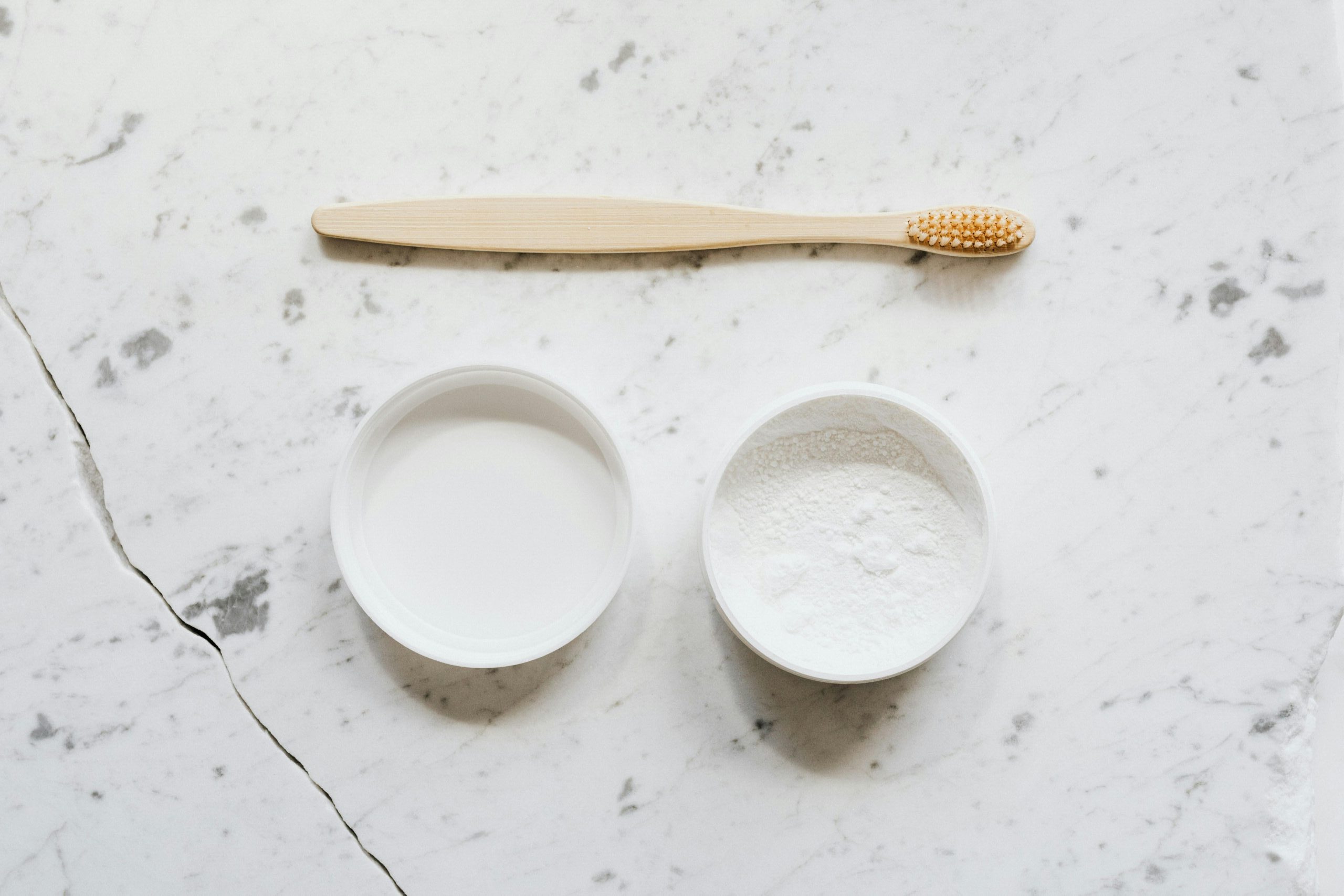
You don’t need me to tell you how important it is to take good care of your teeth… but conventional toothpastes often have chemicals in them that are terrible for you, even if they do leave your smile a little whiter and your mouth a little cleaner.
If you’ve been looking for a truly awesome, all-natural, do it yourself dental care product, homemade tooth powder is definitely for you!
I’ve been making and using it myself, and I am shocked at how wonderful it is for my teeth!!
Let me tell you about it right quick…
(As an Amazon Associate, I earn from qualifying purchases.)Additionally, I am not a doctor or health physician, and the advice given here should not be used in place of professional medical advice. Please do your own research.
Benefits I’m Enjoying from Using My DIY Tooth Powder
Since I’ve been using my own homemade tooth powder, I’ve experienced some astounding benefits.
First, my teeth genuinely look and feel cleaner! They are definitely whiter, and I also find that I don’t have that yucky feeling that plaque is building up on my teeth by the end of the day.
Next, my teeth have noticeably re-mineralized. I had three tiny holes that were forming in my teeth, and now they’ve almost completely remineralized and are no longer there! Another tooth had a bigger cavity forming at the gum line, and that has almost completely remineralized, too!
Another huge bonus? My teeth are much less sensitive these days!
I also really like the taste of the tooth powder! It isn’t sweet at all, and I use essential oils to give it a refreshing taste. In-and-of itself, the tooth powder has a very neutral and pleasant flavor that I don’t necessarily need to change. That said, I appreciate the additional benefits that the essential oils add to my dental health regimen.
I can barely describe the relief I feel, not only that my teeth are healing (!!) but that the powder I’m using on them has absolutely no harmful additives, and I can make it myself, at home!
DIY Tooth Powder Recipe
To make this tooth powder, you’ll need:
- 2 tablespoons food grade Bentonite Clay https://amzn.to/3Lh9IyR
- 1 tablespoon food grade Calcium Carbonate https://amzn.to/4jNkRnS
- 1/2 teaspoon Mineral Salt, finely ground https://amzn.to/4aTBkV5
- Therapeutic essential oils of choice https://amzn.to/3LoNzP7
- Small sterilized glass jar with a tight-fitting lid https://amzn.to/49iXr6a
(As an Amazon Associate, I earn from qualifying purchases.)I am not a medical professional so please do your own research.
The process is simple. Just mix the bentonite clay, calcium carbonate, and mineral salt together. If you’re mixing the ingredients in a bowl, use one that’s nonreactive with the ingredients, such as ceramic or wood, instead of a metal one. Using a wooden spoon insures there is no reaction to the acidic ingredients. Wooden Spoons https://amzn.to/49Crq82
Now, add the essential oils and mix well.
(The oils will distribute well throughout the mixture without clumping.)
I make and mix my tooth powder in THIS SMALL COFFEE GRINDER, and the end result is a wonderfully fine, smooth, well-mixed powder. https://amzn.to/3Ldvm79
The Purpose of Each Ingredient
Bentonite Clay
Bentonite clay is a clay that forms from the ash of volcanic explosions and is well-known for its clarifying and absorbent properties. It has an extremely fine texture and feels sort of oily to the touch. When mixed with water, it makes a fine gel-like paste.
Bentonite clay makes a wonderful base for tooth powder because it:
- makes a smooth powder that transforms into a paste when it gets into your mouth.
- absorbs toxins and bacteria from your mouth, which you spit out when you rinse.
- the minerals and fine grain of the clay clean and polish your teeth.
Calcium Carbonate
Calcium carbonate is the chalky, powdered form of hard calcium deposits. It can be mined from the Earth, created chemically using acidic water, or by grinding up egg or mollusk shells.
Calcium carbonate is a very important ingredient in tooth powder because it remineralizes teeth, creating stronger enamel, making teeth less sensitive, and repairing cavities.
It also functions as the main gentle abrasive agent in the powder, scrubbing away plaque, stains, and bacteria on a minute level. Calcium carbonate is gentler on teeth than other similar mineral powders and is the best option to use in your tooth powder.
Mineral Salt
Finely ground mineral salt acts in tandem with the calcium carbonate to scrub and remineralize teeth. It also kills bacteria in the mouth directly, and also balances the pH in your mouth, which creates an environment that keeps more bacteria from easily regrowing.
Salt also works as an abrasive agent, so it also helps to scrub away plaque and staining on your teeth.
The best salt to use is mineral salt because the minerals absorb into your teeth and help strengthen them. REDMOND’S or pink Himalayan salt are both excellent choices to add to your tooth powder.
Essential Oils
The essential oils I have tried in my tooth powder, or would like to try, are especially good for promoting oral health by controlling bacteria, preventing plaque, and supporting healthy functions in the mouth.
These are powerful oils, and I also enjoy the taste they give the tooth powder. I use 10-12 drops of oils (alone or a combination) per one batch of tooth powder.
Some excellent choices include:
- Tea tree oil – strong antibacterial and antimicrobial, prevents plaque https://amzn.to/4jNlb64
- Cinnamon oil – antioxidant, anti-inflammatory, prevents plaque, nice flavor https://amzn.to/454FohC
- Clove bud oil – antibacterial, heal and soothe gums, strengthens enamel https://amzn.to/4bytW1v
- Peppermint oil – antibacterial, anti-inflammatory, stimulates saliva glands https://amzn.to/45SausV
- Sage oil – antibacterial and antimicrobial, soothing, gum healer https://amzn.to/4jKok6I
(As an Amazon Associate, I earn from qualifying purchases.)I am not a medical professional so please do your own research.
Side note: if you’d like to use dried herbs or spices instead of essential oils, that’s perfectly fine – you’ll still enjoy the healing benefits of the properties of these plants. It helps to use a small coffee grinder to make sure all of your herbs (and the salt) is all ground to an extra-fine powder.
Some dried herbs and spices that you might like to use:
- Cinnamon https://amzn.to/4qS9cGD
- Cloves https://amzn.to/49kro5J
- Mint https://amzn.to/4qDuXud
- Citrus peels https://amzn.to/49vErQB
(As an Amazon Associate, I earn from qualifying purchases.)I am not a medical professional so please do your own research.
Important Note: Please be sure to use food grade ingredients in this tooth powder, and do not swallow while brushing your teeth.
A Glass Container
I store all of my homemade care and cleaning products in glass jars with tight-fitting lids.
THIS is my favorite jar for storing tooth powder. https://amzn.to/4jOyXVV
(As an Amazon Associate, I earn from qualifying purchases.)I am not a medical professional so please do your own research.
It’s important to use glass because it doesn’t leach harmful chemicals or micro/nano plastics into my products – which I work hard to ensure are all-natural, chemical, and plastic free. I don’t want the container undermining my health and safety or harming the environment!
I always use tight-fitting lids to keep the contents from spoiling from exposure to air or moisture.
How to Use Homemade Tooth Powder
Using the tooth powder is really easy!
Just wet your toothbrush and tap it on the side of the sink. (The bristles should point down toward the sink.) This leaves your toothbrush damp, but not so wet that it’ll leave droplets of water that will fall into and cause clumps in your tooth powder.
Next, lightly dab your damp toothbrush in the tooth powder just enough to coat the tops of the bristles in the powder. You can use more, if you need it.
Now, you can brush and rinse your teeth and mouth as usual!
Other Ingredients You Might Want to Add or Omit
There are many things in the natural world that are might be included in your tooth powder. Some are wonderful additions, others have drawbacks, and I’d like to cover a few of them now… If you want to add other ingredients to your tooth powder, just be sure to research them beforehand.
Diatomaceous Earth (DE): Diatomaceous Earth is a naturally occurring mineral layer that formed on ancient lakebeds. It was created from the skeletons of microscopic plankton-like creatures (called diatoms) that lived in those ancient lakes.
As the lakes dried up, the layer dried out. Today, people harvest it from the Earth and grind it into a fine powder for use in a wide variety of uses and for its health benefits.
DE is an excellent ingredient to add to your tooth powder. https://amzn.to/3Z8J5PJ
(As an Amazon Associate, I earn from qualifying purchases.)I am not a medical professional so please do your own research.
It’s mainly composed of silica and is very useful as a very fine abrasive material that cleans and polishes teeth.
It’s often found in commercial toothpastes for this reason and it’s a good addition to your homemade tooth powder, as well. Additionally, the minerals in DE are helpful to remineralize teeth.
To use, add one tablespoon of DE to your tooth powder recipe. It could also be used in place of the bentonite clay.
Only use food grade diatomaceous earth, as pool grade diatomaceous earth is heat-treated and can be hazardous to our health.
Baking Soda (sodium bicarbonate): Baking soda works very well as an abrasive agent in tooth powder. It also whitens teeth and may help reduce inflammation in the gums. https://amzn.to/4qSFktM
(As an Amazon Associate, I earn from qualifying purchases.)I am not a medical professional so please do your own research.
However, because baking soda is a salt, it’s very important not to swallow it. It can add a salty flavor to the mixture that some folks don’t like. It’s also slightly more abrasive than calcium carbonate, which can eventually rub away your teeth’s enamel.
It’s important to know that using baking soda over time can lead to dangerous chemical imbalances in the body’s blood, and create dangerous kidney problems, as well. Little children should not use baking soda in their tooth care products at all.
All of those precautions aside, baking soda can be a wonderful addition to your tooth powder, if you’d like to use it.
To use, add two teaspoons of baking soda to your recipe.
Myrrh Powder: Myrrh is the resin made by powder is a very popular ingredient to add to tooth powder because of its powerful antibacterial and astringent properties. It also adds a nice flavor to the powder. https://amzn.to/4sBSKMg
(As an Amazon Associate, I earn from qualifying purchases.)I am not a medical professional so please do your own research.
Myrrh is a bit pricey, but well-worth the cost. If you buy it, it will last quite a long time and pay for itself many times over in money saved from not using store-bought toothpastes.
To use myrrh, add a tablespoon of it to your recipe.
Xylitol: Xylitol is a common non-sugar dietary sweetener that many people add to their tooth powder to sweeten the taste. It’s often framed as good for teeth because it doesn’t feed the bacteria that create plaque, which reduces tooth decay and gum disease. https://amzn.to/3NHSD1C
(As an Amazon Associate, I earn from qualifying purchases.)I am not a medical professional so please do your own research.
Xylitol occurs naturally, too, in fruits, birch trees, and in our bodies as a by-product of digestion. The xylitol powder available as a sugar replacement is a synthesized product made in a lab, though.
Unfortunately, new research on xylitol has found that it activates platelets in people’s blood. These activated platelets are much more prone to clotting in the bloodstream. Blood clots are dangerous and can easily block blood vessels, causing heart attacks, strokes, and vein blockages.
Eating lots of xylitol can also cause digestive upset, but that isn’t really a concern when used in tooth powder.
To me, tooth powder has a nice flavor that doesn’t need sweetening – especially with an ingredient that can cause serious problems – so I don’t use xylitol in my tooth powder… That said, some people do combine it with essential oils, such as orange oil, to make a sweet and tasty tooth powder for children.
To use xylitol, add 2 teaspoons of xylitol powder to the recipe.
I hope you’ve enjoyed this post as much as I’ve enjoyed sharing it!
I think it’s only right that people should be able to use clean, simple ingredients to care for and heal our bodies. It shouldn’t cost an arm and a leg… and certainly shouldn’t make us sick over time!
If you decide to make your own tooth powder, please come back and comment on what you used and how you like it! I’m always looking to share good health tips, and our teeth are so important!
To your great health and wellness,
Cariel
Sources:
Bentonite Clay: Environmental Properties and Applications. Google Books. Pusch, Rowland. 2015. Retrieved January 06, 2026
Bentonite Clays for Therapeutic Purposes and Biomaterial Design. Current Pharmaceutical Design. Srasra. et al. February 1, 2020. Retrieved January 06, 2026
Baking soda as an abrasive in toothpastes: Mechanism of action and safety and effectiveness considerations. The Journal of the American Dental Association. Anderson T. Hara. et al. February, 2018. Retrieved January 06, 2026.
Calcium Carbonate – A Versatile Mineral. Springer Nature Link (formerly SpringerLink). Kuhlmann, R. 2001. Retrieved January 06, 2026
Diatomaceous earth, silica, soluble silicon. Grow Youthful, Health at Any Age. Miller, David. Retrieved January 06, 2026.
Health Risks and Dangers of Xylitol in Food. Cleveland Clinic. June 07, 2024. Retrieved January 06, 2026.
Qualitative-Characterization-of-the-Abrasive-Component-of-Charcoal-Containing-Toothpastes-and-the-Effect-on-Dentin-Roughness-Caracterizacion-Cualitativa-del-Componente-Abrasivo-de-las-Pastas-Dentales.pdf. International Journal of Odontostomatology. Marchan, Shivaugn. et al. January 2003. 346-55. Retrieved January 06, 2026
Xylitol is prothrombotic and associated with cardiovascular risk. European Heart Clinic. Oxford Academic. Witkowski, Marko. et al. July 14, 2024. Retrieved January 06, 2026.
135381-the-several-forms-of-calcium-carbonate.pdf. The American Journal of Science. Johnson, John, et al. June, 1916.
Leave a Reply